UPDATED: October 8, 2026
Health & Wellness in the High Desert
Health & Wellness in the High Desert
Introduction to Wellness in the California High Desert
There is something about the California High Desert that makes people slow down.
Maybe it is the silence. Maybe it is the enormous sky, the strange rock formations, the miles of open desert, or the way the light changes as afternoon turns into evening. Whatever brings people here, Joshua Tree and the surrounding High Desert communities have developed a wellness culture that feels distinctly different from what you might find in Los Angeles, Palm Springs, or other Southern California destinations.
Across Joshua Tree, Yucca Valley, Twentynine Palms, Morongo Valley, and Pioneertown, you will find Pilates and yoga studios, massage and bodywork practitioners, sound baths, meditation, breathwork, somatic practices, retreats, outdoor adventures, and plenty of unconventional approaches to feeling better.
But High Desert wellness isn’t only something you book.
Sometimes it is a sunrise hike before the heat arrives. Sometimes it is sitting outside with coffee and nowhere you need to be. It might be an afternoon Pilates class, a massage after several days of hiking, a sound bath, or simply watching the stars appear over the desert.
That combination of movement, nature, creativity, quiet, and community is what makes wellness in the High Desert so interesting.
Why Joshua Tree and the High Desert Have Become a Wellness Destination
Southern California has no shortage of wellness destinations, but the High Desert offers something that has become increasingly difficult to find: space.
Physical space, certainly. But also mental space.
Drive through Joshua Tree, Yucca Valley, or the open desert around Twentynine Palms and the landscape quickly begins to feel different from the cities most visitors have left behind. Buildings become farther apart. Traffic disappears. Mountains and boulder formations replace the urban skyline.
The pace changes.
For decades, that environment has attracted artists, musicians, writers, healers, entrepreneurs, outdoor adventurers, and people simply looking for another way to live.
Wellness grew naturally alongside that community.
Today, visitors can find everything from contemporary Pilates and strength training to meditation, massage, sound experiences, yoga, breathwork, retreats, and practices that are considerably harder to categorize.
Many are small and independently operated. Sessions can be personal. Classes are often intimate. And the desert itself frequently becomes part of the experience.
How the Desert Landscape Becomes Part of the Experience
You don’t necessarily need to enter a studio to understand why people associate the High Desert with well-being.
Walk outside.
The visual simplicity of the landscape can be striking: open valleys, distant mountains, massive boulder formations, Joshua trees, creosote, and enormous stretches of sky.
Then there is the quiet.
The desert isn’t actually silent. There is wind, birds, coyotes, insects, and the occasional distant car. But compared with an urban environment, the amount of background noise can drop dramatically.
That quieter environment is one reason outdoor meditation, yoga, retreats, guided hikes, sound experiences, and other wellness activities feel so at home here.
The landscape isn’t merely scenery surrounding the experience.
Quite often, the landscape is part of the experience.
Movement and Fitness in Joshua Tree and the High Desert
Wellness in the High Desert isn’t limited to meditation and sound baths. There is also a growing community centered around movement, mobility, strength, and staying physically active.
That makes sense in a place where hiking, climbing, scrambling over rocks, working on desert properties, and spending time outdoors are part of everyday life.
Pilates
Pilates has become an increasingly visible part of the High Desert fitness and wellness scene.
With its emphasis on controlled movement, alignment, core strength, mobility, and body awareness, Pilates works particularly well for people who want to become stronger without approaching every workout as a competition.
Local options include Joshua Tree Pilates, where instruction can support everyone from beginners to experienced practitioners.
For High Desert residents, Pilates can also complement an active lifestyle built around hiking, climbing, cycling, gardening, and other outdoor activities.
For visitors, a class can be an unexpectedly good addition to a Joshua Tree trip—especially after spending a couple of days discovering muscles you didn’t know you had while scrambling around rocks.
Yoga
Yoga and Joshua Tree have been connected for years, and today visitors will find a wide variety of practices throughout the High Desert.
Some classes are physically challenging. Others emphasize stretching, restorative movement, meditation, breath, or relaxation.
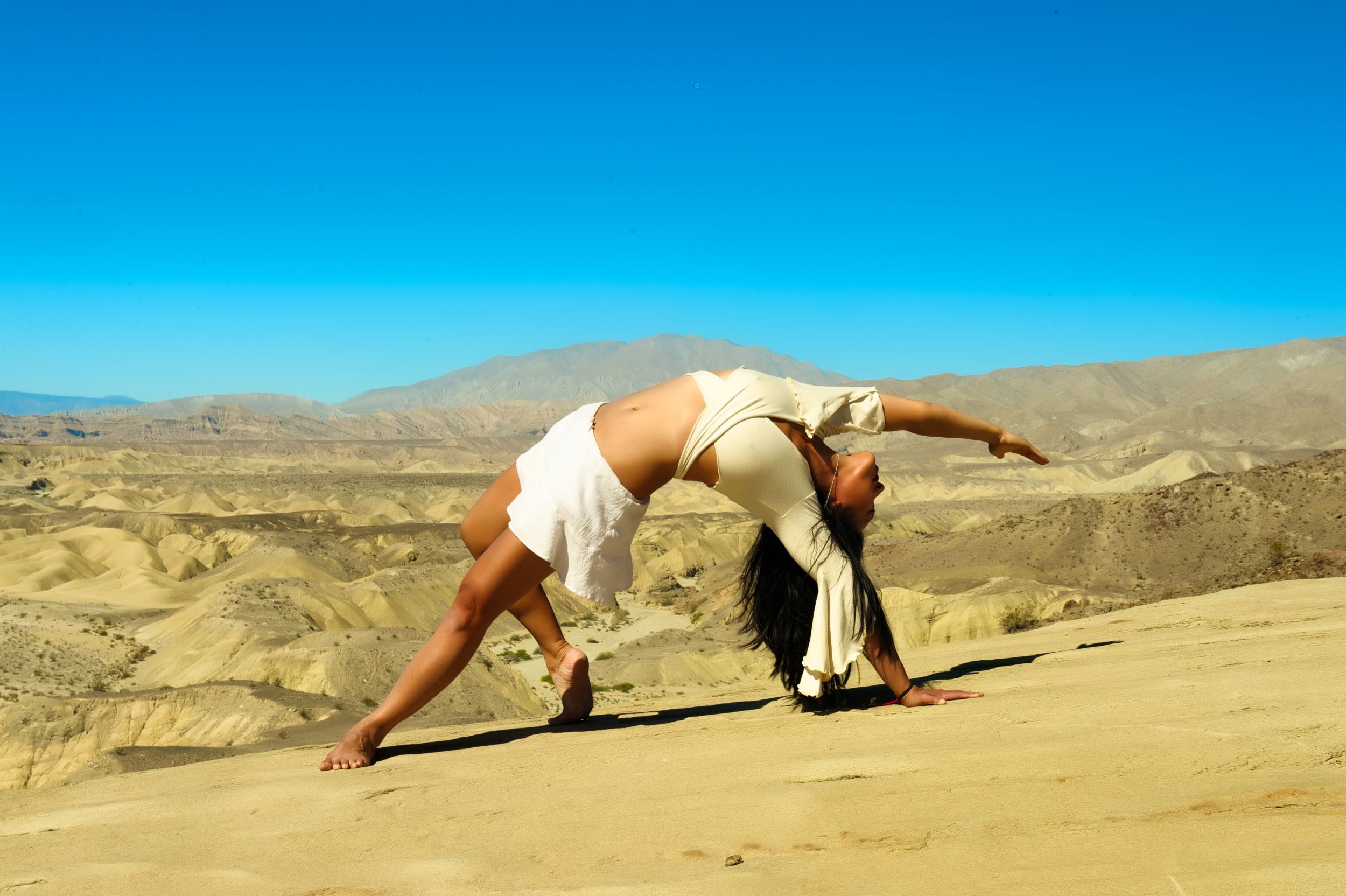
You may also encounter outdoor yoga, retreat-based practices, sound incorporated into sessions, and classes that draw heavily on the desert environment.
That variety makes High Desert yoga accessible whether you are looking for a workout, greater mobility, a meditative practice, or simply an hour to slow down.
Functional Fitness and Strength Training
Not everyone wants their wellness with a side of incense.
Functional fitness and strength training are also part of the High Desert movement community.
These approaches tend to focus on useful strength: balance, stability, mobility, coordination, and movement patterns that translate into everyday life.
That is particularly relevant in a region where staying active might mean hiking several miles through Joshua Tree National Park one day and hauling something across a five-acre property the next.
Mindful Movement
Between traditional fitness and meditation is a growing category of movement focused on awareness.
These practices may incorporate elements of mobility training, somatic movement, breathwork, stretching, mindfulness, or body awareness.
The goal isn’t necessarily to move faster or lift more.
Sometimes the point is simply to pay closer attention to how your body moves and feels.
Sound Baths and Sound Experiences
Few wellness experiences have become as closely associated with Joshua Tree and the High Desert as the sound bath.
A typical sound bath involves resting or lying down while a practitioner creates an immersive environment using instruments such as crystal singing bowls, metal bowls, gongs, chimes, drums, voice, and other forms of sound.
People seek them out for different reasons. Some use sound experiences as a form of meditation. Others enjoy them for relaxation, reflection, or simply because lying down and listening to beautiful sounds for an hour feels pretty good.
The High Desert is particularly suited to the experience.
Quiet surroundings, dramatic landscapes, unusual spaces, and a community willing to experiment with different forms of wellness have helped make sound experiences part of the area’s identity.
For visitors exploring things to do in Joshua Tree beyond hiking and sightseeing, a sound bath has become one of the region’s signature wellness experiences.
Somatic Wellness and Nervous System Regulation
Somatic practices have also become increasingly visible throughout the wellness world, including in Joshua Tree and the surrounding High Desert.
Rather than focusing exclusively on thoughts or physical exercise, somatic approaches pay attention to sensations in the body and how people respond physically to stress, emotion, and their environment.
Depending on the practitioner, sessions might incorporate gentle movement, guided awareness, breath, touch, education, or other techniques.
There is considerable variation within this category, so it is worth researching individual practitioners and understanding exactly what they offer before booking.
For some people, somatic work becomes a complement to fitness, meditation, massage, therapy, or other forms of self-care.
Massage, Bodywork and Recovery
After a few days hiking, climbing, driving dirt roads, and exploring Joshua Tree National Park, a massage can suddenly sound like an excellent idea.
Fortunately, massage and bodywork are well represented throughout the High Desert.
Practitioners in Joshua Tree, Yucca Valley, Twentynine Palms, and surrounding communities offer everything from traditional relaxation massage to deep tissue work and other specialized forms of bodywork.
Some practitioners also combine multiple approaches within a single session.
For visitors, massage can provide a welcome recovery day between outdoor adventures.
For residents, bodywork is simply another part of the local wellness ecosystem.
Meditation, Breathwork and Mindfulness
You don’t have to work particularly hard to find a quiet place in the High Desert.
That makes the region a natural setting for meditation and mindfulness.
Guided meditation experiences may incorporate breath, visualization, awareness, relaxation, or contemplative practices. Breathwork can range from simple calming techniques to longer facilitated sessions.
But you don’t necessarily need a class.
One of the easiest ways to experience mindfulness in the desert is simply to find somewhere comfortable, put the phone away for a while, and sit.
Watch the light move across the mountains.
Listen.
The desert tends to provide the rest.
Outdoor Wellness: Sometimes the Best Studio Has No Walls
Some of the best wellness experiences in the High Desert don’t appear on a class schedule.
They are outside.
Joshua Tree and the surrounding communities provide extraordinary opportunities to move, explore, and spend time in nature.
Hiking
From short nature walks to challenging backcountry routes, hiking is one of the easiest ways to combine movement with time outdoors.
Joshua Tree National Park is the obvious destination, but trails and open-space opportunities extend throughout the region.
A morning walk can be exercise, exploration, photography, meditation, or all four at once.
Just remember that desert hiking requires planning. Carry adequate water, pay attention to temperatures, protect yourself from the sun, and don’t underestimate distances simply because the terrain looks open.
Rock Climbing
Joshua Tree is internationally known for rock climbing, attracting climbers from around the world.
Climbing obviously provides a physical challenge, but it also demands concentration, problem-solving, trust, and an unusually direct relationship with the landscape.
Even visitors who have never climbed before can find guided experiences designed to introduce them to the sport.
Stargazing
Then the sun goes down.
Away from the brightest areas of Southern California, the High Desert can offer remarkable views of the night sky.
Stargazing requires almost nothing: find a safe place, get comfortable, turn off unnecessary lights, and give your eyes time to adjust.
For many visitors, an hour sitting beneath the desert sky ends up being as memorable as anything they scheduled during the day.
Nature, Without an Agenda
Not every outdoor experience needs to become an activity.
Watch birds. Photograph Joshua trees. Sit on a porch. Walk a dirt road. Look for wildflowers after a wet winter. Watch a storm move across the valley.
Or do absolutely nothing.
In the High Desert, that counts too.
Creativity as a Form of Wellness
The High Desert has attracted artists, musicians, photographers, writers, designers, and other creative people for generations.
That creative culture overlaps naturally with wellness.
Throughout the region you’ll find workshops, retreats, art experiences, music, community gatherings, and events that combine creativity with movement, mindfulness, nature, or personal exploration.
For many people, making something can be every bit as restorative as attending a class.
Painting, writing, playing music, photographing the desert, building something, or learning a new skill provides another way to slow down and become absorbed in the present moment.
Planning a High Desert Wellness Day
You don’t need to book a weeklong retreat to experience the wellness side of Joshua Tree.
A day can be surprisingly simple.
Start early with a walk or hike while temperatures are comfortable. Stop for breakfast or coffee in Joshua Tree or Yucca Valley. Book a Pilates or yoga class in the late morning, leave the afternoon open for massage, bodywork, a nap, a pool, or absolutely nothing, and finish the day outside as the sun disappears behind the mountains.
After dark, look up.
That’s a pretty good High Desert wellness retreat right there.
High Desert Wellness FAQ
Is Joshua Tree a wellness destination?
Yes. Joshua Tree and the surrounding High Desert communities have developed a diverse wellness scene that includes yoga, Pilates, massage, sound baths, meditation, breathwork, somatic practices, retreats, hiking, climbing, and other outdoor experiences.
Where can I find wellness experiences near Joshua Tree?
Wellness studios, practitioners, classes, and retreats can be found throughout Joshua Tree, Yucca Valley, Twentynine Palms, Morongo Valley, Pioneertown, and nearby High Desert communities.
What wellness activities is Joshua Tree known for?
Joshua Tree is particularly associated with yoga, sound baths, meditation, retreats, massage and bodywork, hiking, rock climbing, stargazing, and nature-based wellness experiences.
Can I find Pilates in Joshua Tree?
Yes. Pilates is available in the Joshua Tree area, including Joshua Tree Pilates. Pilates can be particularly useful for people interested in strength, mobility, alignment, and body awareness.
Do I need to book a retreat to experience wellness in Joshua Tree?
No. Visitors can build their own wellness day or weekend around individual classes, massage, hiking, meditation, sound experiences, healthy food, outdoor activities, and time spent relaxing in the desert.
What is the best time of year for outdoor wellness activities in the High Desert?
Fall, winter, and spring generally provide the most comfortable conditions for hiking and other daytime outdoor activities. Summer can be extremely hot, so outdoor exercise should be planned carefully around temperatures, sun exposure, and hydration.
Wellness, High Desert Style
What makes wellness in Joshua Tree and the High Desert distinctive isn’t any single studio, treatment, class, or trend.
It is the combination.
You can take a Pilates class in the morning, hike among giant boulders in the afternoon, get a massage, watch an outrageous desert sunset, eat dinner in town, and spend the end of the evening looking at stars.
Or you can skip all of that and spend the afternoon reading on a porch.
The High Desert gives you room to decide what feeling well means to you.
For locals, that relationship with the desert can become part of everyday life. For visitors, even a few days here can provide something increasingly difficult to find elsewhere in Southern California:
A little more room to move, think, breathe, and simply be.
Frequently Asked Questions About Wellness in Joshua Tree and the High Desert
Is Joshua Tree a wellness destination?
Yes. Joshua Tree and the surrounding California High Desert have developed a distinctive wellness scene centered around movement, nature, creativity, and relaxation. Visitors and residents can explore Pilates, yoga, sound baths, massage, meditation, breathwork, wellness retreats, hiking, and other outdoor experiences throughout the region.
What are the best wellness experiences in Joshua Tree?
Some of the most popular Joshua Tree wellness experiences include sound baths, yoga classes, Pilates, massage and bodywork, guided meditation, hiking, rock climbing, and stargazing. For a complete desert wellness day, combine an early morning outdoor adventure with an afternoon class or massage, then enjoy sunset and the night sky.
Where can I find wellness studios and practitioners near Joshua Tree?
Wellness businesses, instructors, and independent practitioners operate throughout Joshua Tree, Yucca Valley, Twentynine Palms, Morongo Valley, and Pioneertown. Offerings include fitness studios, yoga instruction, massage, meditation, bodywork, and retreat experiences. Many are independently operated, so checking schedules and booking requirements before visiting is recommended.
What makes High Desert wellness different from Palm Springs or Los Angeles?
The High Desert offers a different atmosphere from the larger wellness markets of Palm Springs and Los Angeles. Many experiences are smaller, independently operated, and closely connected to the natural landscape. Rather than emphasizing luxury amenities or intensive fitness programs, much of the local wellness culture revolves around personal attention, creativity, outdoor activity, and a slower pace.
Can I take Pilates classes in Joshua Tree?
Yes. Pilates is part of the growing High Desert movement and fitness community. Studios such as Joshua Tree Pilates offer opportunities to explore strength, alignment, mobility, and body awareness. Pilates can be suitable for beginners as well as experienced participants, depending on the class and instructor.
Are there yoga classes in Joshua Tree and Yucca Valley?
Yes. Yoga classes and private instruction are available throughout Joshua Tree, Yucca Valley, and surrounding High Desert communities. Depending on the instructor, experiences may include vinyasa, hatha, restorative yoga, yin yoga, meditation-based sessions, and outdoor practices. Check individual studio schedules for current offerings.
What is a Joshua Tree sound bath?
A sound bath is an immersive listening and relaxation experience in which participants typically rest while a practitioner plays instruments such as crystal singing bowls, gongs, chimes, and drums. Sound baths have become closely associated with Joshua Tree wellness culture and are popular among visitors interested in meditation, relaxation, and unusual desert experiences. No previous experience is usually necessary.
Do sound baths have proven health benefits?
Many participants describe sound baths as relaxing or meditative, and some preliminary research suggests possible benefits for stress and mood. However, evidence remains limited, and sound baths should not be considered a substitute for medical or mental health treatment. They can still be an enjoyable way to unwind and experience the High Desert’s creative wellness culture.
What are somatic wellness and breathwork?
Somatic wellness involves practices that encourage awareness of physical sensations, movement, and responses to stress. Breathwork uses intentional breathing techniques that may support relaxation, concentration, or mindfulness. Both are represented in the broader High Desert wellness community, although approaches vary considerably by practitioner. Beginners should ask about session intensity, methods, and any relevant health precautions before participating.
Can I book massage and bodywork near Joshua Tree National Park?
Yes. Massage therapists and bodywork practitioners serve Joshua Tree, Yucca Valley, Twentynine Palms, and surrounding communities. Services may include relaxation massage, deep tissue massage, myofascial techniques, and other specialized approaches. A massage can be a welcome addition to a desert vacation, particularly after hiking or climbing, although treatment suitability depends on individual needs.
Are there wellness retreats near Joshua Tree?
Yes. Joshua Tree and the surrounding High Desert are known for retreat experiences that may combine yoga, meditation, sound baths, movement, creative workshops, personal reflection, and outdoor activities. Some are multi-day programs with accommodations, while others offer individual workshops or shorter experiences. You can also create your own wellness weekend by booking activities separately.
Do I need to be spiritual to enjoy wellness activities in Joshua Tree?
Not at all. The High Desert wellness scene includes everything from conventional fitness, Pilates, yoga, and massage to meditation, creative workshops, sound experiences, and spiritually oriented retreats. You can choose activities that fit your interests and comfort level without participating in practices that don’t appeal to you.
What outdoor activities are part of High Desert wellness?
Hiking, rock climbing, nature walks, photography, birdwatching, cycling, camping, and stargazing are all ways to enjoy the High Desert outdoors. Joshua Tree National Park is a major destination, but outdoor experiences extend across the surrounding communities. Many people find that spending time in nature is one of the most enjoyable parts of visiting the region.
Is hiking in Joshua Tree suitable for beginners?
Yes, provided you choose an appropriate trail and prepare for desert conditions. Joshua Tree National Park offers short nature walks as well as challenging hikes. Beginners should start with manageable distances, carry plenty of water, wear sun protection, and check weather and trail conditions. Summer heat can make even short hikes dangerous, so early starts and seasonal planning are important.
Why is stargazing popular in Joshua Tree and the High Desert?
Joshua Tree and the surrounding High Desert offer opportunities to experience impressive night skies, particularly away from developed areas and artificial lighting. Stargazing is popular because it requires little equipment and offers a chance to appreciate the desert after dark. Clear weather, moon phases, and the location you choose can make a significant difference in visibility.
When is the best time of year for wellness activities in the High Desert?
Fall, winter, and spring generally provide the most comfortable temperatures for hiking, outdoor yoga, climbing, and other daytime activities. Summer can bring extreme heat, making indoor classes, massage, and carefully planned early morning activities more practical. Winter nights can be surprisingly cold, so layers are important for stargazing and evening events.
Is High Desert wellness just for tourists?
No. Although Joshua Tree attracts visitors seeking retreats and wellness experiences, local residents are an important part of the region’s wellness community. Pilates studios, yoga instructors, massage therapists, fitness professionals, and other practitioners provide ongoing services to people living in Joshua Tree, Yucca Valley, Twentynine Palms, Morongo Valley, and nearby communities.
How can I plan a wellness weekend in Joshua Tree?
Start with one or two experiences you genuinely want to try rather than filling every hour. You might begin with a morning hike, visit a local café, take a Pilates or yoga class, schedule an afternoon massage, and finish with sunset or stargazing. For a longer stay, add a sound bath, creative workshop, or retreat session. Leave some unscheduled time, too. Slowing down is part of the appeal of the High Desert.